This post may contain affiliate links, which means I’ll receive a commission if you purchase through my links, at no extra cost to you. Please read full disclosure for more information.

Many people turn to different types of meditation as a tool to improve focus, support mental health, and cultivate deep inner calm.
But if you’ve ever tried it, you know the mind can take you on an endless detour of intrusive thoughts and distraction.
Sitting still physically is one thing, but staying still while your mind replays every imaginable “what if” scenario is a whole different challenge.
When you’re just starting out, one of the biggest challenges is how to quiet your mind in those moments. Should you try to think about nothing? Or should you follow your thoughts?
And for that reason, this blog post shares practical ways you can refocus your scattered thoughts with simple mental checkpoints and gentle awareness techniques that help you come back to the present moment with more ease.
What To Think About When Meditating: 6 Calming Practices That Anchor Your Thoughts in the Present Moment
During mindfulness meditation, we feel frustrated by the constant chatter in our head, but that mental noise is often the reason that draws us to the practice.
Before we explore whether thoughts should arise during meditation and how you can calm your restless body and mind, let’s explore why having thoughts is an entirely normal part of the experience.
Are You Supposed to Think During Meditation?
Many of us think that when you meditate, it’s absolutely necessary to have a perfectly blank mind, and if you can’t do it, your meditation practice is failing.
But in reality, meditation isn’t about shutting down and forcing your mind to stop overthinking.
The brain’s core function is to process and connect information. Because of this, neural activities like planning, thinking, daydreaming, and grasping at stories don’t simply switch off even while sleeping.
The constant mental chatter shows you what it’s been holding onto all along. So, it’s absolutely normal and even expected for your mind to be brimming with internal dialogue during meditation.
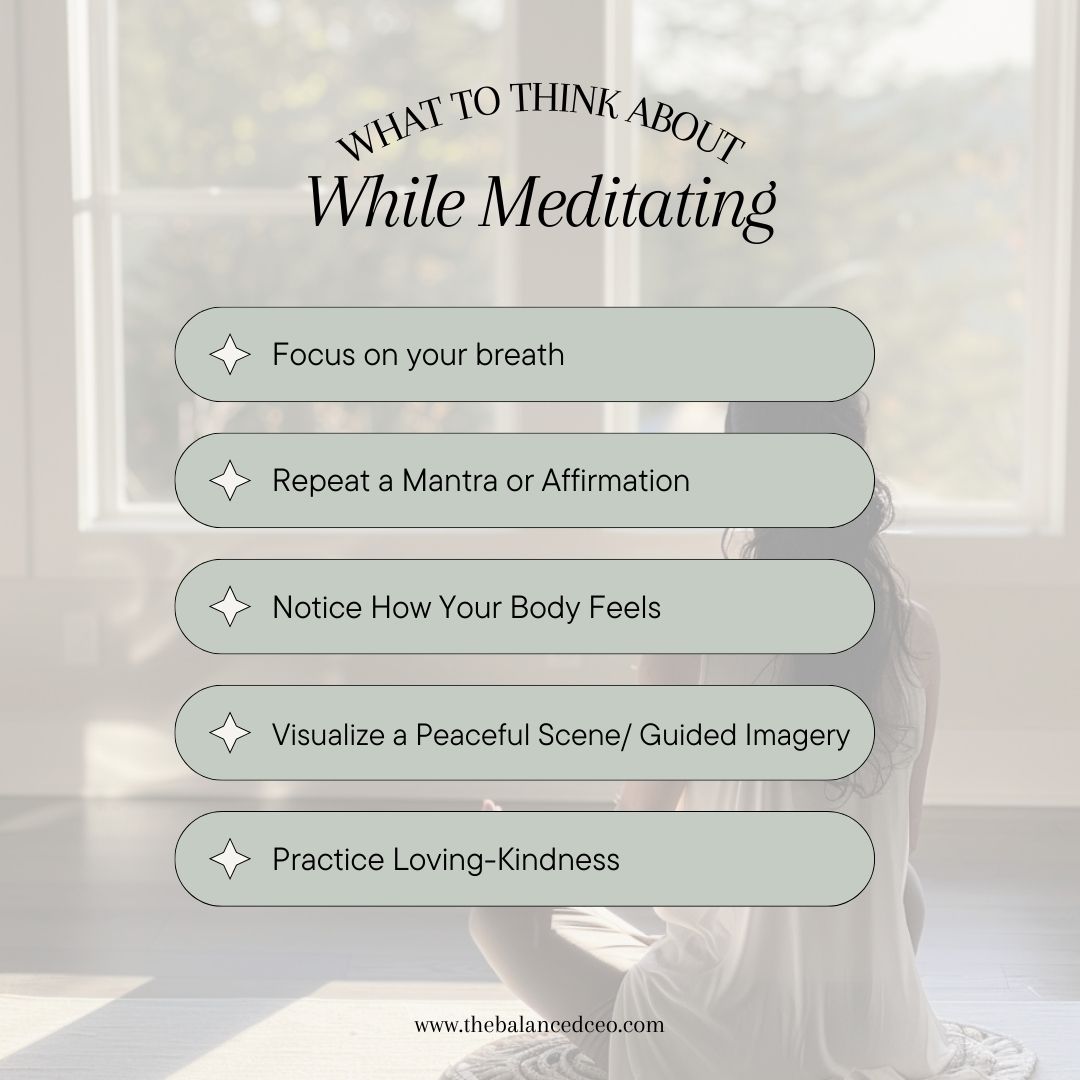
What to Think About While Meditating to Deepen Your Practice?
If you are unsure of what to focus on during meditation, these mindful tips can help guide your practice.
1. Focus on Your Breath
Breathe is one of the simplest anchors that keeps your mind grounded. Whenever any restless thoughts start to surface during your mindfulness practice, notice the natural rhythm of your breathing without trying to control it.
Each steady return to focusing on your breath gives your mind something tangible to lean against. Over time, this strengthens attention and teaches your mind to rest in the present moment.
2. Repeat a Mantra or Affirmation
A mantra or a positive affirmation creates a consistent mental flow that naturally draws your mind away from distraction. Even simple words like “I feel safe and calm” or “This moment is more than enough” guide your thoughts along one single, clear thread.
Repeating these phrases can help you quiet your inner dialogue and foster a centered, steady state.
3. Notice How Your Body Feels
When you are mindful of part of your body and physical sensations—the gentle pressure of your hands resting on your lap, the steady pulse of your breathing, the warmth of your touch—you give your awareness a focal point that brings your attention to the present moment.
Instead of following every mind wandering idea, you make the body your anchor, whether through a full body scan or simply deep breathing, making it easier to maintain a calm, steady space during every meditation session.
4. Visualize a Peaceful Scene or Guided Imagery
Visualizing a calming mental landscape or engaging in guided imagery, like walking in a quiet forest, sitting beside a peaceful lake, or watching a sunrise, can turn your meditation into a relaxing experience.
Imagining a place that feels safe and calming not only releases tension from your body but also keeps your mind engaged, as the mind often responds to imaginary environments as if they were real.
5. Practice Loving-Kindness
Instead of forcing your mind to go blank, you can intentionally direct compassionate thoughts towards yourself and those around you. Phrases like “May I live with peace” or “May I be at ease in heart and mind” redirect inner criticism to self-kindness.
This practice of meditation cultivates emotional well-being and adds a deeper, heart-led feel to your meditation rather than keeping it solely a mental experience.
Also Read: How to Meditate Effectively When You Don’t Think It’s Working
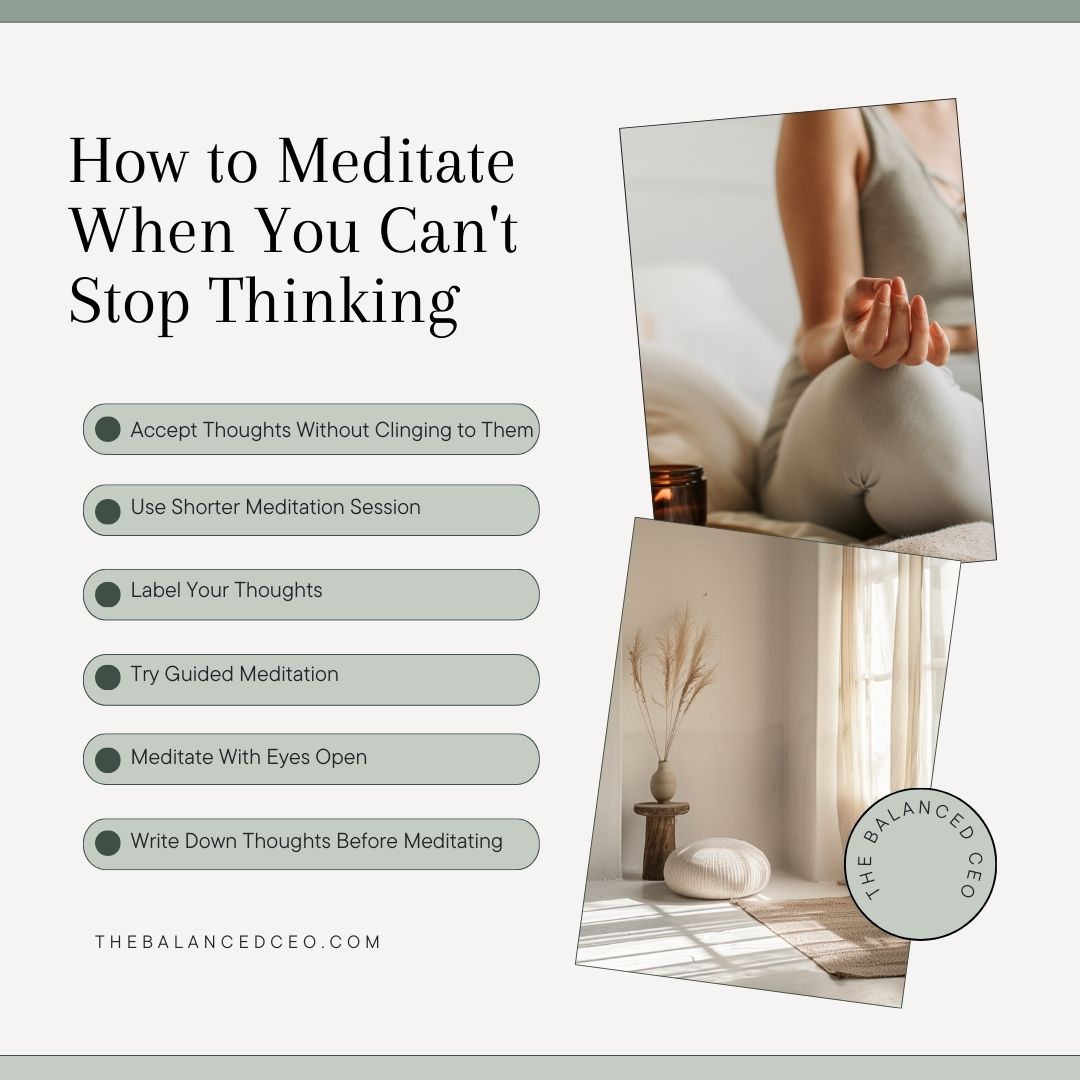
How to Meditate When You Can’t Stop Thinking: Tips for a Busy Mind
If your mind feels like a crowded room every time you try to meditate, these tips can help you find calm and guide you to a more meaningful practice.
1. Accept Thoughts Without Clinging to Them
Meditation doesn’t demand you to wrestle your thoughts into silence—it asks you to simply notice them, free from filter and judgment.
Every time any distracting thought appears, you have a choice not to be carried away by it. Instead of holding on or feeding them with more attention, allow it to pass naturally without letting your mind clutter with even more noise.
2. Use Shorter Meditation Session
Practicing meditation in shorter sessions takes away the pressure of doing it correctly and makes it easier to stay mindful in the moment.
Consider training your mind through micro-practice. A simple 2-5 minute daily session gives you a brief pause to notice your thoughts and gently return them to the present.
Over time, these daily repetition trains your mind to relax more easily and build a mindfulness routine that feels natural rather than forced.
3. Label Your Thoughts
When you start to get carried away in a mental spiral, name the experience. Whether you’re planning your next to-do list, replaying old conversations, or stressing over future commitments, see the thoughts arise and allow them to pass.
Labeling your feelings allows you to create distance between your thoughts and you, turning you from being an active participant to an observer.
4. Try Guided Meditation
If your mind feels very restless, trying short guided meditation sessions can make the practice less challenging.
Listening to a calm guiding voice can lead your mind to follow a clear, calming path, starting from the top.
This works really well on days when motivating yourself to try even a few minutes of self-guided meditation practice feels out of reach.
5. Meditate With Eyes Open
It may seem counterintuitive, but meditating with a soft, unfocused, open gaze can ground you in the present and lessen the swirl of overthinking.
Keeping your focus on a candle flame, a beautiful outdoor view, or a spot on the wall, lightly tethered your attention to what’s in front of you. This subtle visual anchor assures your mind that it’s okay to pause, take deep breaths, and simply just be.
6. Write Down Thoughts Before Meditating
Sometimes your mind won’t settle because it’s clinging to worries, unfinished plans, and remaining work, afraid they’ll slip away if you let them go.
Doing a quick brain dump before meditating can help you quit the mental chatter. After you’ve written down those thoughts on paper, you can begin to meditate, knowing you’ve acknowledged those thoughts without the pressure of holding on to them.
Guide Your Mind Into Deeper Awareness!
Let these simple mindfulness practices become a gentle thought anchor that keeps you calmly present. With daily practice, you’ll find that meditation isn’t about shutting off your mind—it’s about filling it with the right kind of awareness.

Michelle Gagliani
Owner & Founder
Michelle is the Founder of The Balanced CEO and a Holistic Nutritionist + Health Coach. She was born and raised in St.Thomas, U.S.V.I., and is currently living in Austin, TX. When she’s not running this blog and online business, she is cozied up at home watching TV, taking long walks in nature, or trying out new healthy recipes.






Leave a Reply