This post may contain affiliate links, which means I’ll receive a commission if you purchase through my links, at no extra cost to you. Please read full disclosure for more information.

Fear has a bad reputation. Most people think of it as a stop sign, like something that shuts you down before you even get moving. But worry isn’t the villain of your story. Your ancestors relied on apprehension to keep them alive. When you shift how you look at being afraid, you unlock your courage and self-belief.
Confidence isn’t about being fearless. It’s about acknowledging anxiety and moving forward. Here’s how to stop letting insecurity control your choices and start stepping into the bold, unshakable version of yourself.
See Fear as Useful
Fear is your body’s way of giving a warning signal. Your nervous system whispers, “Something may be wrong here, so pay attention!” When your chest tightens before something big, that doesn’t mean you’re weak. It means your body knows you’re about to do something meaningful.
Think of it as a compass. If you lean into it, it points you toward growth. If you let it freeze you, you’ll never move.
What Is Confidence Really?
Boldness isn’t some magical DNA gift reserved for extroverts and CEOs. It’s simply trust in yourself, knowing you can survive the stumble, the awkward silence, or even the “no.”
Researchers describe courage as a skill and an attitude — something you can learn, practice, and repeat until it sticks. Developing self-confidence works the same way. It’s not about waiting until you feel ready. Confidence is something you can work on, rather than something you wait to happen to you.
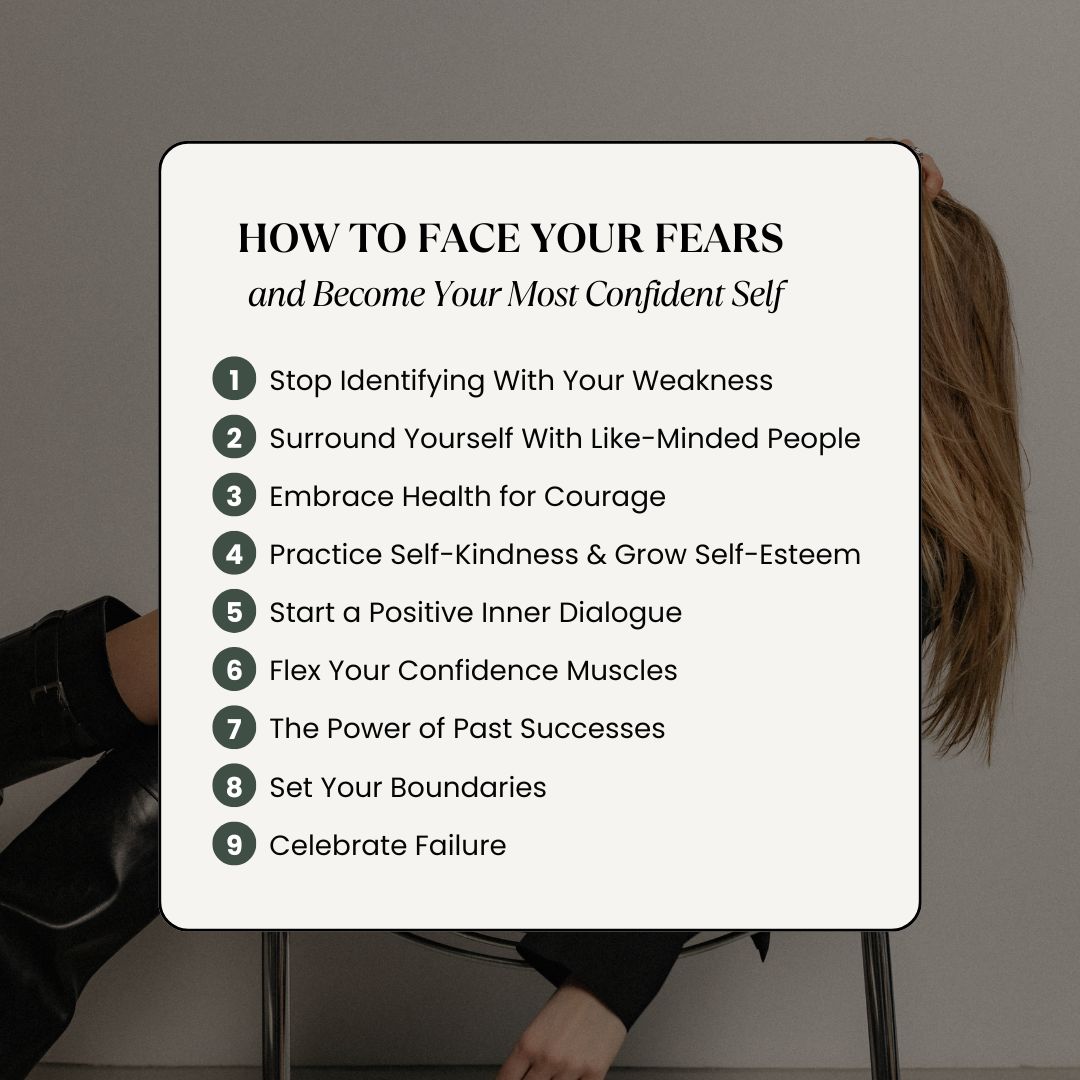
9 Ways to Become Your Most Confident Self
These strategies can help you face your fears instead of running from them. Cultivate your confidence and take control of your life.
1. Stop Identifying With Your Weakness
The stories you repeat about yourself become your reality. Thoughts like, “I’m terrible at public speaking,” keep you boxed in. Instead, separate your identity from the moment. You’re not bad at something, you’re learning. Reframe how you think, and you’ll begin to see yourself differently.
2. Surround Yourself With Like-Minded People
Confidence doesn’t grow in toxic soil. Surround yourself with similarly inspired people who mirror your strengths instead of amplifying flaws. They will inspire you to act accordingly. Positivity is contagious, and the right supportive circle will fuel your fearlessness.
3. Embrace Health for Courage
Your body and mind are partners. Regular movement, balanced food, and enough sleep keep you alive and resilient. Think about a time when you stayed up all night studying for a test. Did you feel confident the next morning, or even more scared that you might fail? A strong, rested body reminds your brain that you can handle this.
4. Practice Self-Kindness and Grow Self-Esteem
Would you talk to your best friend the way you talk to yourself? Probably not. Change your inner voice from a critic into a supportive friend. Self-compassion isn’t indulgent — it’s fuel. When you make a mistake, don’t be too hard on yourself. Speak to yourself with encouragement instead of criticism, and you’ll find it easier to take a brave stride.
5. Start a Positive Inner Dialogue
Take things a step further by creating a constant positive inner dialogue. Practice positive affirmations every day, so when you are facing an uncertain situation, your mind won’t default to negativity. Rehearsing positive language creates new neural pathways, reshaping how your brain responds to anxiety.
Related Reads:
6. Flex Your Confidence Muscles
Having self-belief is like weightlifting. You don’t start with 200 pounds. Begin with small acts of bravery, like speaking up in a meeting, setting a new boundary, or introducing yourself to someone new. Each small action builds stronger muscles for a bigger lift out of self-doubt. In science, this is called habituation, but it’s not about tolerating anxiety. It’s learning to think your way through fear so next time you know it’s not worth worrying about.
7. The Power of Past Successes
Fear loves to overpower your positive memories. Something negative will take up more space in your mind than something positive, so it’s important to keep those wins top of mind. Keep an achievement file with emails, photos, and reminders of moments when you succeeded. Next time you feel like you can’t do something, look through your file and remind yourself of all the times you overcame self-doubt.
8. Set Your Boundaries
Healthy boundaries allow you to avoid the bad habit of people-pleasing. Many people struggle with wanting to appease everyone, and this can make you afraid to do what you want to do. Whether it’s a family member or a boss, you likely have someone in your life who pressures you to do what they say, instead of letting your own values guide you. Practice saying “no” to build up strong boundaries. Tell your boss you can’t work late, or turn down a relative who asks invasive questions. Over time, people will think of you as a person who stands up for themself.
9. Celebrate Failure
Failure isn’t evidence that you’re not good enough. It’s proof you were brave enough to try. Every stumble gives feedback you can’t get from standing still. The best way you can face your fear is by learning from it. Next time, you will go into that situation with more strength and confidence.
The Confidence Mindset
Feeling empowered does not depend on whether you won or will win. It’s about knowing you’ll be okay in either outcome. When you embrace anxiety as a teacher, celebrate failures and take brave action, you create a mindset that setbacks can’t shake.
While fear always shows up, it’s not the boss. See it as a signal, flex your courage in small steps, choose self-compassion over criticism, and build unshakable trust in yourself.

Cora Gold
Contributor
Cora Gold is the Editor-in-Chief of Revivalist magazine, a publication dedicated to happy, healthy, and mindful living.






Leave a Reply